Load Newsreader Bold Font
What is storytelling in web design? Storytelling in web design is using the real people, history, and personality behind a business to guide every choice on a website, from the colors and photos to the homepage headline. It’s what makes a website feel like a specific person instead of a category of business, and it’s the one part of your website nobody else can copy.
This post came out of a conversation with my friend Chris Misterek, an incredible web designer who started Self Made Web Designer a few years ago. We were talking about how AI is changing the way websites get built, and I walked away from that conversation stuck on one idea. AI can make a website look good, but only you can make it tell your story.
As a team, we’ve been having the same conversation, so I decided to test it. I typed this prompt into an AI website builder, “Website for a wedding photographer in Arizona who loves adventurous couples.” About sixty seconds later (maybe a little bit longer), I had a homepage.
It was okay. Maybe the right word is “average.” Warm beige background, a big serif headline, a full-width photo of a couple on a cliff (very AI-like), and a tagline that said “Capturing Timeless Moments for Adventurous Hearts.” It looked nice, but it could have belonged to any wedding photographer in Arizona.
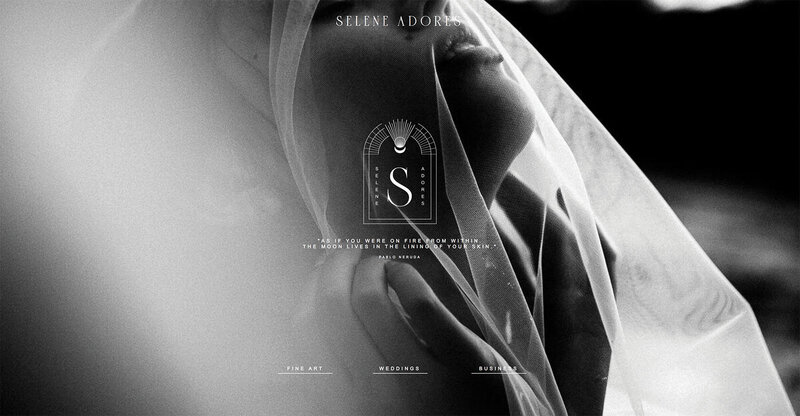
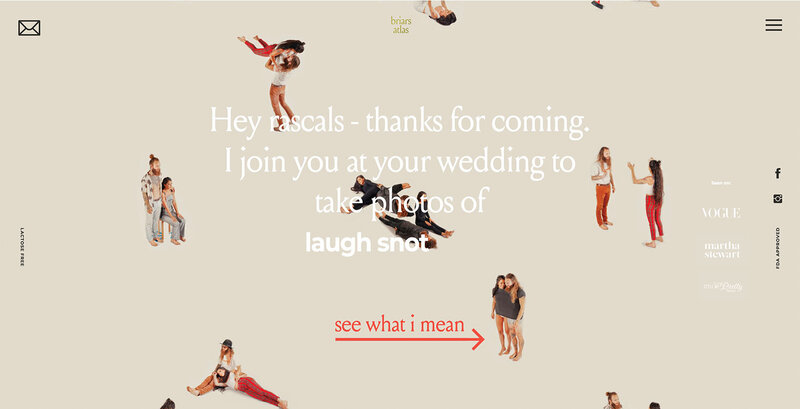
Then I opened a site a Showit designer had built for a non-profit. The homepage opened with a photo of a volunteer’s muddy work boots next to a pile of shovels and the line “We’ve rebuilt 43 miles of trail by hand. Grab a shovel.” In one image and one sentence, you knew who they were, what they’d done, and exactly where you fit in.
That’s the difference a story makes. The first site looked like a website. The second one felt like a person.
If you’re a small business owner building your own website (or getting ready to work with a designer), this post is for you. We’ll look at why so many websites end up looking alike, and how to tell your story on yours, with a little help from AI along the way.
Why Do So Many Websites Look the Same?
Most websites look the same because they’re built from whatever is popular right now, whether that comes from a trending template, a competitor’s site you admired, or an AI website builder.
AI website builders make this especially easy to see. They create a website by predicting what it “should” look like, based on patterns from millions of existing sites. When you ask one for a photographer’s homepage, it pulls together the most common version of every photographer homepage it has seen. That’s simply how the tool works, and it’s why AI-generated designs almost always look current (and very similar to each other).
What trending looks like on a website right now
If you’ve browsed websites in your industry lately (or tried an AI website builder), you’ve probably seen some version of these.
- Neutral palettes in beige, cream, sage, and terracotta
- Oversized serif headlines paired with a clean sans-serif body font
- Bento-box grids of rounded cards
- Soft gradient blobs floating behind the text
- Buzzword taglines built on words like “elevate,” “timeless,” “curated,” and “intentional”
- A three-column “Services” section with a little icon over each one
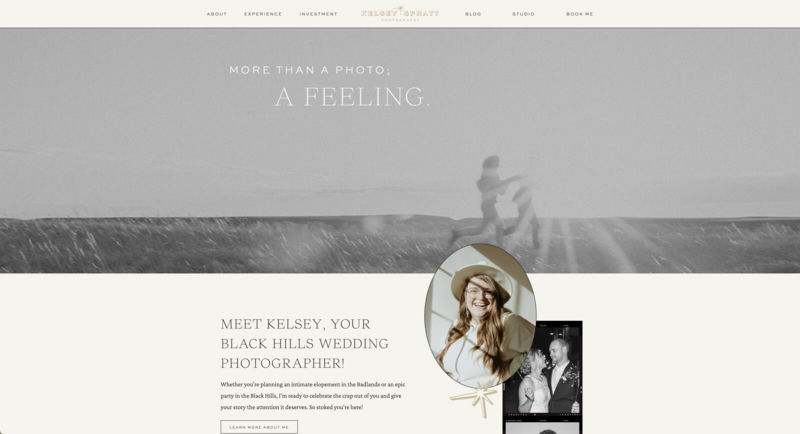
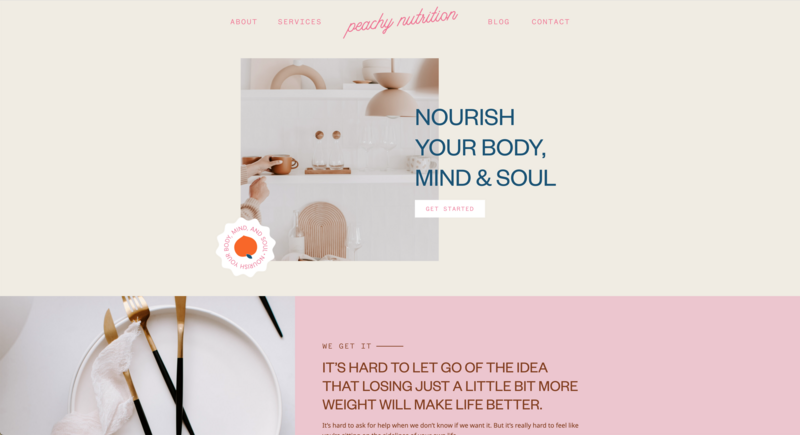
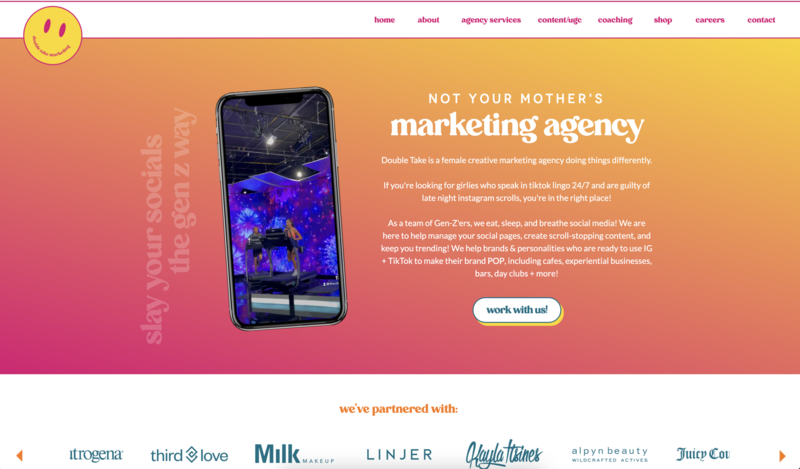
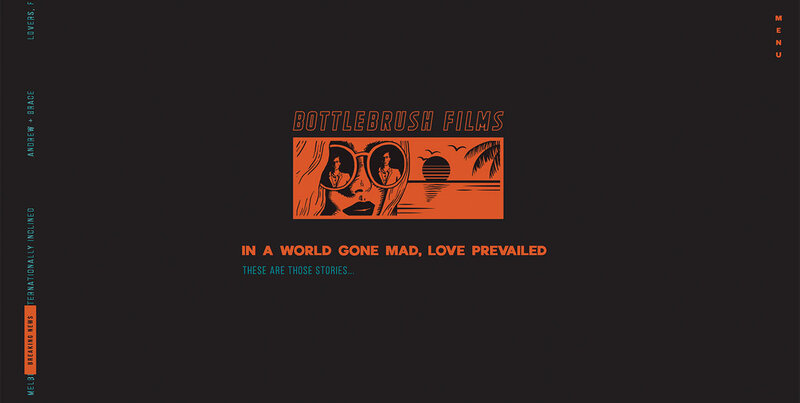
None of these are bad design choices, and plenty of great designers use them. The catch is that when everyone reaches for the same choices, those choices stop saying anything about you.
Why “trending” becomes “forgettable” so fast
A trend only becomes a trend once everyone’s doing it, so following one means blending in.
When a florist and a financial coach end up with the same beige palette and the same “Elevate your everyday” headline, those two very different businesses start to blur together.
Your potential client is usually comparing you against several other options in a few browser tabs. If your website looks like the other tabs, you’ve lost your best chance to stand out before they’ve read a single word.
There’s also a shelf life problem. A website built on this year’s trends will look dated the moment the trend shifts, and design trends move quickly now. A website built on your story ages much more gracefully, because your story doesn’t go out of style.
So is AI the problem? No. AI is great at giving you a clean, modern starting point, fast. It just can’t tell anyone why your business exists, because it doesn’t know. That part has to come from you.
Why Does Storytelling in Web Design Matter?
Storytelling in web design matters because people hire someone they feel like they already know, and a story is the fastest way to get there.
It starts with questions about the people behind the business. Why did you start? Who do you love working with? What makes you a little weird? What’s the best thing a client ever said to you? Whether you’re answering those yourself or a designer is asking them on a discovery call, the answers become the raw material for your website.
That process is storytelling, and every design choice becomes a way to say something true about your business.
Storytelling is human-centered design
There’s a name for this approach. IDEO, the design firm that helped popularize it, describes human-centered design as a problem-solving approach that puts people at the heart of the process, or in their words, “designing with people, not just for them” (IDEO U).
Promet Source, a web design agency, applies the same idea to websites. It describes human-centered design as an approach that puts “the perspectives, desires, context, and behaviors of the intended audiences at the forefront of the design and development process” (Promet Source).
A website built from trends or a quick prompt is designed for a category of business. A website built from your story is designed with the actual people who run it and hire it. The listening comes first, and the listening is where the story comes from.
Storytelling is how people decide who to trust
Most of the time (maybe every time), people don’t hire the best-looking website. People hire the person they feel like they already know. Stories are how we get to know someone quickly, and a website is often the very first conversation a client has with you.
Think about the last time you booked a photographer or a hairstylist. Chances are you picked someone because of a detail that stuck, like a funny About page or a line that made you think “oh, she gets it.” That detail is story, and it’s what moves someone from browsing to booking.
How your story turns into design decisions
When your story leads, every element on the page has a reason behind it.
Color comes from something real, like the exact green of the door on your first studio, instead of this year’s popular palette.
Typography matches your personality, so a playful brand might get a hand-drawn font while a quiet, thoughtful coach gets something soft and simple.
Photography shows your actual life and work, including the messy, specific moments stock photos never capture.
Copy sounds like you talking, with your favorite phrases and opinions intact.
Page flow follows the journey your clients take, from “who is this?” to “I need to work with her.”
Anyone can pick a nice color palette. Your story is what explains why that palette belongs to you, and that reason is what makes a website memorable.
Stories stick in a way trends don’t
There’s a reason we remember fairy tales from childhood and forget what we ate for lunch on Tuesday. Stories give our brains something to hold onto, usually a character who has a problem and finds a way through it.
The best websites use that same structure. The client is the main character, their problem is the reason they’re searching, and your business is the guide who helps them get where they want to go. When a website is built that way, visitors see themselves in it, and that feeling is far more persuasive than a trendy gradient.
What Do Storytelling Websites Look Like? 4 Examples
The clearest way to see storytelling in web design is side by side. These four small businesses are made up, but the pattern is real. For each one, here’s the trend-first website it could easily end up with, and the story-first website it could have once the story leads.
Example 1: A small-town bakery
The trend-first version. A cream background with a close-up of a croissant. The headline says “Artisan Baked Goods Made with Love.” Below it sits a grid of product cards and a “Visit Us” button with a Google Map.
The story-first version. The owner took over the bakery from her grandmother in 2019 and still uses the same handwritten recipe cards. The homepage opens with a scan of Grandma June’s cinnamon roll recipe, butter stains and all. The headline reads “Grandma’s recipes, still baked in Grandma’s oven, now by her granddaughter.” The brand colors come straight from the faded mint trim on the original storefront.
Why the story wins. “Made with love” appears on thousands of bakery websites. A butter-stained recipe card belongs to exactly one.
Example 2: A business coach for new moms
The trend-first version. A sage and blush palette, a smiling headshot on the right, and the headline “Empowering Women to Build Businesses They Love.” The services section offers three packages with icons and bullet points.
The story-first version. The coach launched her own business during naptime with a baby monitor on her desk. The hero image is a real photo of that desk, with a mug of cold coffee next to the glowing baby monitor. The headline says “You don’t need more time. You need a plan for the 90 minutes you’ve got.” Her packages are named after nap lengths.
Why the story wins. A new mom scrolling at 2 a.m. sees the baby monitor and thinks “that’s me.” Nobody feels seen by the word “empowering.”
Example 3: An interior designer
The trend-first version. A full-screen photo of a minimalist living room, an oversized serif headline saying “Curated Spaces for Modern Living,” and a bento grid of portfolio images.
The story-first version. She grew up moving eleven times as a military kid and became obsessed with making any space feel like home fast. The site is built around before-and-after sliders, and the About page is a short timeline of every bedroom she had growing up. Her tagline is “Home isn’t a place you find. It’s a place you make.”
Why the story wins. Clients hiring an interior designer are buying a feeling. Her story tells them she understands that feeling better than anyone.
Example 4: A travel agency
The trend-first version. A full-width photo of a turquoise beach, a headline saying “Curated Journeys for the Modern Traveler,” and a grid of destination cards with “Learn More” buttons.
The story-first version. The owner spent ten years as a flight attendant before starting her agency, and she knows every way a trip can go sideways. Her homepage opens with a photo of her old crew badge sitting on a passport packed with stamps. The headline says “I’ve been stuck in 40 airports so you never have to be.” Her trip packages are named after her favorite airport codes.
Why the story wins. People hiring a travel agent want to hand off the stress. Her story tells them she’s already handled every problem they’re worried about.
What these examples have in common
In every trend-first version, the design is built from the category, so a bakery gets a bakery website and a coach gets a coach website. In every story-first version, the design is built from the person. That’s the whole difference, and it’s the reason storytelling websites keep winning the clients who care about connection.
What Parts of Your Story Should Go on Your Website?
AI can write a story-shaped paragraph, but it doesn’t know which details of your story matter. These are the pieces that need you in the room.
Specific details from real life
The grandmother’s recipe card and the naptime desk work because they’re specific. AI fills gaps with the most common answer, so it will always reach for “made with love” before it reaches for butter stains. Specificity is what makes a story believable, and only you (or a designer who asked the right questions) know the specifics.
The quirks you’d never think to mention
Some of the best website stories come from things clients mention in passing. I once sat in on a discovery call where a florist apologized for being late because she’d stopped to rescue a turtle crossing the road. Her designer turned that into a tiny illustrated turtle that shows up on every page, and clients ask about it constantly. No prompt would have produced that turtle, because the florist would never have typed it.
Knowing what to leave out
Storytelling is as much about editing as it is about adding. A good designer (or an honest friend) can tell when your ten-year career history is burying the one moment that explains why you do this work. AI tends to include everything you give it and treat every piece as equally important, so this is where a second set of human eyes really helps.
Emotional pacing across the page
A great website moves visitors through feelings in a deliberate order. Maybe it starts with recognition (“she understands my problem”) and slowly builds toward relief (“I can finally stop figuring this out alone”). You can plan that arc on purpose with layout, white space, image choice, and where your call-to-action shows up. Templates and AI builders usually arrange sections in the order most websites use, which isn’t always the order your clients need.
If you want to go deeper on how visitors think as they move through a page, Chris breaks it down in his Self Made Web Designer video, The Psychology of a Perfect Website. It’s worth a watch before you rework your homepage.
How Can You Use AI in Web Design Without Losing Your Story?
You let AI handle the busywork and keep the meaning for yourself. Here’s where I’d start.
If you’re building your own website
- Write your story before you design anything. Spend 20 minutes answering why you started, and write down one specific moment that sums up your work.
- Use AI for structure, and save identity for you. Let it suggest a sitemap or a starting layout, then rebuild each section around your story.
- Swap generic phrases for specific ones. If your headline includes words like “elevate” or “curated,” try replacing it with a real detail only you could say.
- Use your own photos wherever you can. A slightly imperfect photo of your real workspace builds more trust than a flawless stock image.
- Let AI polish, not write. AI is helpful for tightening a paragraph you already wrote. It’s much less helpful when it’s writing about a life it hasn’t lived.
- Run a “could this be anyone?” test. Before you launch, cover your logo and read your homepage. If it could belong to any business in your industry, it needs more story.
If you’re working with a web designer
Pay attention to the questions they ask. A designer who’s great at storytelling will want to know things like “What’s a moment you knew you were in the right business?” and “What do clients always say after working with you?” Those answers often turn into your headlines. If you’re working with a Showit Design Partner, bring your story notes to your first call so you can start there.
Frequently Asked Questions About Storytelling in Web Design
What is storytelling in web design?
Storytelling in web design is the practice of using a business’s real history and personality to guide every design decision on a website. Color, typography, photography, copy, and page flow all work together so a visitor understands who the business is and why it exists, instead of only seeing what it sells.
Why is storytelling important in web design?
Storytelling is important in web design because people tend to hire someone they feel like they already know. A website built on specific, real details helps you stand out from competitors with similar-looking sites and builds trust before a visitor ever reaches out.
What are some examples of storytelling websites?
Storytelling websites use real, specific details to show who a business is. A bakery might open with a scan of a grandmother’s handwritten recipe card, or a non-profit might lead with a photo of muddy work boots and the number of trail miles its volunteers have rebuilt. The common thread is that the design comes from the people behind the business instead of from a trend.
How do I make my website tell a story?
To make your website tell a story, start by writing down why you started your business and one specific moment that sums up your work. Then use those details in your homepage headline and About page, and replace generic phrases like “elevate” or “curated” with details only your business could claim.
Can I use AI to help tell my story on my website?
Yes, AI can help with early tasks like brainstorming a sitemap, suggesting a layout, or tightening copy you’ve already written. The story itself still needs to come from you, since AI fills gaps with the most common answer instead of the specific details that make your business memorable.
Why Storytelling Is the Future of Web Design
AI is going to keep making web design faster and prettier. That’s good news for anyone who needs a quick, clean website. It also means trendy, polished design is about to become the baseline, and the baseline never stands out for long.
When every website can look current, the websites that win will be the ones that feel personal. Think about the bakery with Grandma June’s recipe card, or the florist with her little illustrated turtle. Those sites don’t compete on trends, because nobody else can copy their story.
So the most valuable thing you can bring to your website is the stuff you might think is too small or too silly to mention. Mention it anyway. That’s usually where the good part is.
A story-driven website also needs a platform that lets you design every detail. If you’re building on Showit, you get complete creative freedom with a drag-and-drop builder, so the site you build can look exactly like the story you’re telling.
Ready to build a website that could only belong to you? Try Showit free for 14 days and see why thousands of creative entrepreneurs trust it to tell their story.

Sarah has been part of the Showit team for nearly four years, where she works as a copywriter crafting content that educates, encourages, and celebrates the creative entrepreneurs who make up the Showit community. When she's not writing, you'll find her with a book in hand (usually something about leadership or personal growth), cheering on Arizona sports teams, or connecting with people over a really good cup of coffee because, let's be honest, there's always a cup nearby. Sarah believes in the power of stories, the importance of showing up authentically, and that every entrepreneur deserves to be celebrated for the brave work they're doing.