Load Newsreader Bold Font
Here’s a question that might sting a little: How many inquiries did you get last month?
If your answer is somewhere between five and fifteen, you might be sitting on more opportunity than you realize. Because when Rachel Traxler, wedding photographer and photography business coach, asks her students that same question, the follow-up is always the same: “Okay. What’s your conversion rate?”
That’s usually where the silence happens.
We’ve been conditioned to believe that more leads equals more bookings. So when things feel slow, the instinct is to post more, be more visible, run more ads, do more everything. But Rachel makes a case worth sitting with: if you’re getting ten inquiries a month and you want to book two weddings, ten inquiries is more than enough. The problem isn’t the top of your funnel. It’s what’s happening after someone lands in it.
Here’s how to stop chasing volume and start fixing what’s actually broken.
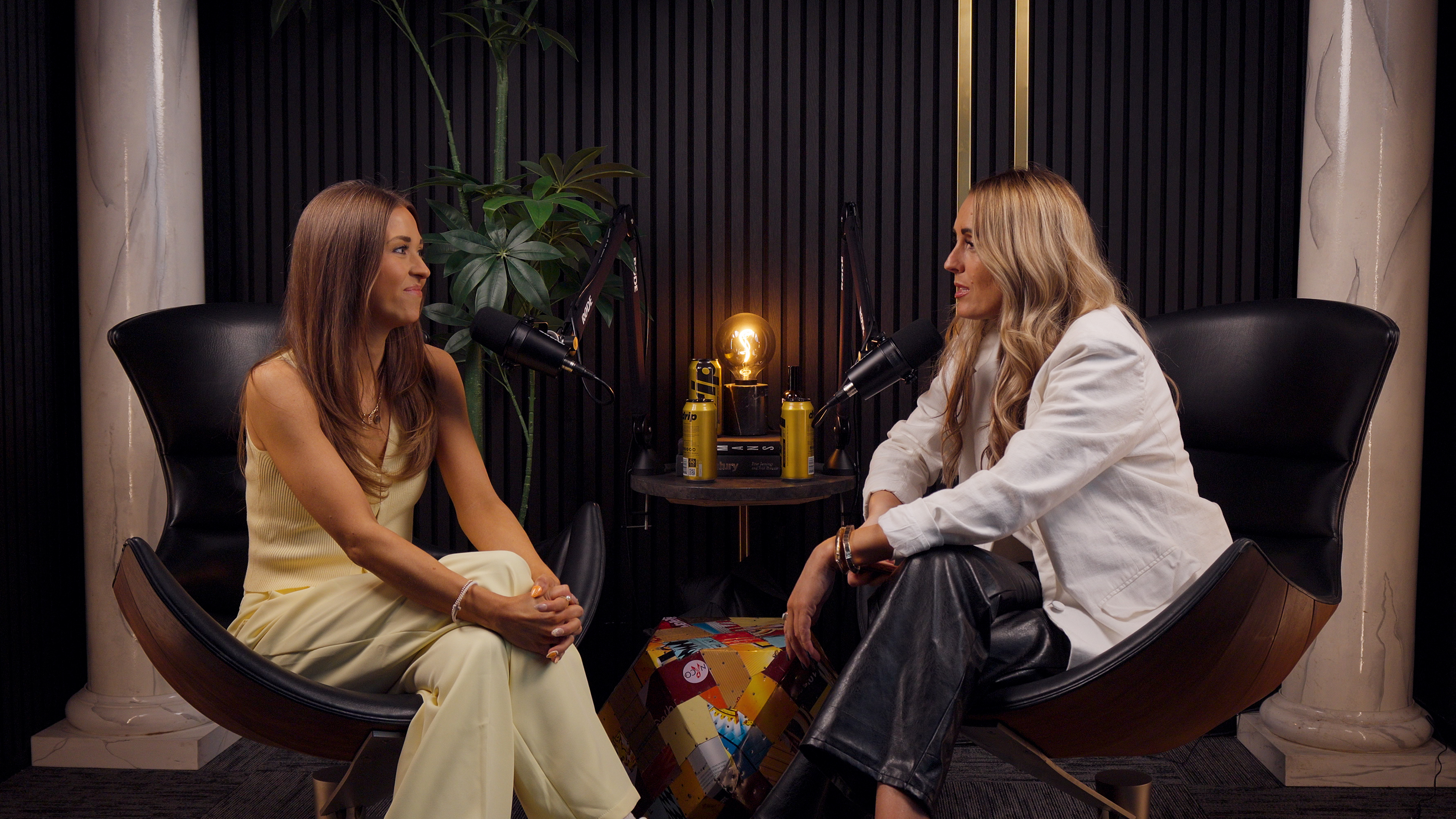
I sat down with Rachel Traxler at WPPI and left genuinely energized in a way that made me want to go home and pull apart my entire inquiry process. The thing about Rachel is she doesn’t hype you up with big lofty ideas. She shows you all the places you’re leaving money on the table and somehow makes it feel exciting instead of embarrassing. Oh, your contact form is buried and you have no redirect page and your six pin posts are just your prettiest photos? Cool. Here’s exactly how to fix it. Let’s go. Everything below is straight from that conversation, and I think it’s going to stick with you the same way it stuck with me. — Jamie at Showit.
Start With Your Contact Form (It’s Doing More Damage Than You Think)
The contact form on your website is not a formality. It’s actually the first real moment of friction between a potential client and a booking, and most photographers treat it like a data collection exercise instead of the beginning of a conversation.
Rachel audits contact forms regularly and the same problems come up almost every time. The form is buried, requiring multiple scrolls before a visitor even sees it. There are too many questions. And some of those questions, like “What drew you to my work?”, are genuinely the wrong ones for this stage.
That’s a great question for an engagement session guide or a phone call, not for a form someone is filling out while they’re still deciding if they even like your pricing range.
The goal of a contact form is simple: get someone to fill it out and take the next step. That’s it. Make it easy, make it fast, and keep it at the top of the page where it’s visible the second someone clicks through on both desktop and mobile.
Rachel added two questions to her own form that changed her conversion rate.
The first: “Would you prefer I send you my standard pricing right away, or would you like to create a custom collection together?” The second: “Would you prefer to book a phone call, or are you ready to make a decision within the next 72 hours?” These aren’t just data-gathering questions. They tell you exactly who you’re talking to before you’ve written a single word back.
Not Every Buyer Is the Same (Your Responses Shouldn’t Be Either)
Rachel breaks her inquiries into three buyer types, and once you see them you can’t unsee them.
The Dreamer Buyer
They already know they want you. They’ve been following you for a year, they just got engaged last month, and they’re essentially asking where to sign. These people don’t need a 20-minute sales call walking them through your whole process. They need a quick path to booking.
The Connector Buyer
This is the most common one. They’re warm but not ready. They want to understand who you are, what it’s like to work with you, and whether they’ll feel comfortable with you on one of the most important days of their life. Phone calls work really well here, and so does content that lets them binge your personality and process before they ever reach out.
The Realist Buyer
This one leads with their venue, their date, and “what are your prices?” A lot of photographers write this person off as a price-shopper who probably isn’t their ideal client. But sometimes the most straightforward inquiry turns into one of your favorite clients. They’re not indifferent, they’re just left-brained, and they know what they want. So give it to them.
When you know which type you’re responding to, you stop sending the same templated reply to everyone and start actually serving people the way they want to be served. That’s where conversion starts to move.
The Redirect Page: The One Thing Most Photographers Are Missing
After someone hits submit on a contact form, most photographers send them to a generic “Thanks, we’ll be in touch!” page and then proceed to check their phone every four minutes waiting to respond before someone else swoops in. Rachel built something different: a redirect page.
The redirect page lives as a hidden page on her Showit website. When someone submits the form, they land there immediately. At the top, there’s a short video of Rachel saying thank you, here’s what happens next, here’s my typical turnaround time. Below that, there’s a big, clear option to book a phone call.
By the time Rachel can even respond to the inquiry, some of those people have already scheduled a call themselves.
Think about what that actually solves. The redirect page answers the “what happens next” question before the client even has to wonder. It sets expectations and keeps the momentum going on their timeline, not just yours.
This means you can stop having to race to be the first one to reply because the system is already doing that for you.
This is the kind of thing that lives on your website and keeps working whether you’re shooting a wedding, on a plane, or doing literally anything else.
“I cannot stop thinking about the redirect page. Someone fills out your contact form and before you’ve even seen the notification, they’ve already watched a short video from you, seen your pricing range, and booked a call. That’s the kind of thing that makes you realize how much unnecessary pressure we put on ourselves to respond instantly. Build the system. Let it do the thing”. — Jamie at Showit
The SEO Mistake Most Photographers Don’t Know They’re Making
If you’ve been leaning on beautiful copy and creative taglines in your H1 and H2 headings, you might be winning on personality and losing on discoverability.
Google, and increasingly AI tools like ChatGPT, read your headers to understand what your page is about. Creative isn’t always clear.
The personality can live in your paragraph bodies. Your headers need to do the heavier SEO lifting.
That means getting specific, not just with location, but with client type. “Las Vegas Wedding Photographer” is fine. “Las Vegas Wedding Photographer for Traveling Couples and Destination Elopements” is better. It tells search engines exactly who you serve, and it tells the right couples that this page was made for them.
Rachel’s framing here is a good one: your portfolio images, your brand colors, the whole visual feel of your site, that’s where personality lives and where it’s doing its best work. Let the visual brand communicate emotion. Let your headers communicate relevance and location.
On Showit, you have full control over exactly how every heading is structured, which means you’re not fighting with a theme or a rigid template to get it right. You can build your H1 with the keywords it needs, then design everything around it without compromise.
Six Instagram Funnels That Work While You’re Not Working
If you’re using your pinned posts on Instagram to showcase your favorite photos or your most-liked reels, you might be leaving a lot of potential leads on the table.
Rachel uses all six pinned slots – three on photos and three on reels as intentional funnels, each designed to speak to a different buyer type or stage of awareness. Here’s how she breaks them down:
- About/Process Funnel: Lets cold audiences get a feel for who you are and what working with you actually looks like.
- Authority Funnel: Showcases venues, clients, and experience that build trust with higher-end clients who need social proof before they’ll inquire.
- Low-Ticket Funnel: Engagement sessions, family sessions, anything that gets someone into your world at a lower commitment level.
- High-Ticket Funnel: Your main wedding packages and the clients who should be booking them.
- Freebie Funnel: A lead magnet that builds your email list and gets people into a longer relationship with your brand.
- Add-On Funnel: Albums, film, upgraded packages, whatever you offer beyond the base booking.
Every funnel points toward a keyword automation or a DM conversation that leads to your email list or contact form. You set them up once and they keep doing the work.
Momentum-based marketing burns people out. Foundational systems keep running when you’re tired, when you haven’t posted in two weeks, when life is just happening. Both matter, but one of them requires your constant energy and one of them doesn’t.
Simplify Before You Scale
The throughline in everything Rachel teaches is this: before you go looking for more leads, look at what you’re already doing with the ones you have.
None of what she’s describing is glamorous. Fixing your contact form, building a redirect page, customizing your responses by buyer type, tightening your headers, setting up your Instagram funnels, these are quiet, one-and-done infrastructure tasks. But they’re the kind of thing that makes everything else more effective.
More inquiries will not fix a leaky funnel. They’ll just accelerate the frustration.
The good news is that most of these fixes don’t require more time in your week. They require a few hours of intentional setup on a platform that can actually hold the structure you’re building.
That’s where Showit comes in.
Custom redirect pages, hidden proposal pages, full control over your headings, clean and flexible page structures that support exactly the kind of funnel thinking Rachel is describing. You’re not fighting the platform to get your site to work the way your business needs it to. You’re building.
Ready to turn your website into a system that converts? Try Showit free for 14 days and see why photographers and creative entrepreneurs trust it to do the heavy lifting.