Load Newsreader Bold Font
Did you hit your 2025 revenue goal? Do you know what it was? Can you name your top 3 priorities for Q1? If you answered any of these questions “no” and you run a creative business, this is for you.
Business goals for creative entrepreneurs are specific, measurable outcomes you plan to achieve within 12 months, paired with weekly actions that create progress. Unlike vague resolutions, effective business goals include a number to track (revenue, subscribers, clients), a deadline, and a simple action plan.
If 2026 is the year you want to grow your creative business, work less, or finally take that dream project off the back burner, let’s build goals that turn your vision into action, without burnout.
Why New Year Business Goals Are a Non-Negotiable
Let’s get real: vague hopes like “I want to grow my business this year” aren’t going to cut it.
New year business goals are specific outcomes you want to hit in the next 12 months, paired with the actions you’ll take to get there. When you name the goal and the plan, you stop relying on motivation and start building momentum.
Here’s why setting new year business goals works:
- Clarity: Goals force you to define what success actually looks like (revenue, time off, leads, launch dates), so you’re not wasting energy on random tasks.
- Focus: Instead of chasing every shiny new idea, your goals become a filter for what you say yes to—and what you skip.
- Accountability: Clear, measurable goals make it easy to track progress and adjust before you’re halfway through the year, wondering what happened.
- Momentum: Small wins stack. When you hit milestones, you build confidence—and it’s way easier to keep going.
For example, “get more clients” is vague. But “book 2 new brand clients per month by improving my website portfolio and sending 5 outreach emails a week” gives you a target and a path.
Think of your goals as a roadmap for the year ahead. Without them, it’s easy to stay busy… without actually moving forward.
Let's talk about 4 Types of Business Goals every Creative needs:
- Financial Business Goals
- Marketing Business Goals
- Team and Systems Business Goals
- Personal Goals
Financial Business Goals: When to Raise Your Prices (And How Much)

.
Money might not be why you started your creative business, but it’s what keeps the lights on and gives you options.
A strong financial new year business goal isn’t just “make more.” It’s a clear revenue target, a profit target, and a simple plan for how you’ll get there. Here’s how to build yours::
1. Set a revenue goal (and do the math).
Dream big, but stay realistic. If your goal is $100,000 in 2026, that’s $8,333/month. Now translate it into real offers:
- Service-based: 4 clients/month at $2,100
- Hybrid: 2 clients/month + 10 digital products/week
The point is to connect the number to a booking/sales plan you can execute.
2. Set a profit goal (not just revenue).
Revenue is great, but profit is what supports your life. Pick a target like 30–50% profit margin (or whatever makes sense for your business), then look at your expenses. Ask:
- What can I cut?
- What can I automate?
- What’s not paying for itself anymore?
3. Plan for taxes + savings.
Turn “surprise expenses” into a system. Set goals for:
- Taxes: saving a percentage of each payment
- Emergency fund: e.g., 1–3 months of expenses
- Future goals: education, gear upgrades, team help, or a passion project
4. Pair each money goal with weekly actions.
Financial goals only work when they’re connected to behavior. Examples:
- Raise prices = update your website + proposals + inquiry flow
- Increase monthly revenue = pitch 3 collaborations/week or follow up on 5 leads/week
- Improve profit = cancel/replace one tool and renegotiate one expense this month
Pro tip: If you’re not sure what to set, start with these three financial new year business goals: revenue, profit, and savings. Everything else can build from there.
Marketing Business Goals: The One Marketing Channel Rule
Your financial goals and marketing goals go hand in hand. If you want to hit your revenue targets, you need a plan to get in front of more people (and the right people).
Marketing new year business goals work best when they focus on one main channel at a time and include a number you can track weekly. Here are a few high-impact options for 2026:
1. Social media consistency (pick 1–2 platforms).
Choose the platform where your best clients already hang out. Then set a goal you can actually keep:
- “Post 2x/week for the next 90 days”
- “Publish 1 Reel + 1 carousel weekly”
Consistency beats intensity.
2. Email list growth (your most reliable long-term asset)
Set a subscriber goal and pick one main driver:
- “Add 300 subscribers by June using one lead magnet”
- “Grow by 25 subscribers/week with a freebie + website opt-in”
Bonus: Also set a simple engagement goal (like improving open or click rate).
3. Website traffic (build an engine, not a one-time spike).
If you want more leads without living on social, prioritize your website:
- “Publish 2 SEO blog posts/month”
- “Increase organic traffic by 20% by Q3”
- “Improve homepage conversion rate (visits → inquiries) by 1–2%”
You can drive traffic through SEO, partnerships, Pinterest, or guest features; pick one primary lever.
4. Launch goals (if you’re selling a product/service).
For each launch, set targets for the whole funnel:
- Leads → conversions → revenue
Example: “Generate 200 leads, convert 3–5%, and hit $10K in sales.”
Pro tip: Break your marketing goals into quarters. Focus on one core channel per quarter so you don’t spread yourself too thin—and so you can actually see what’s working.
Team and Systems Business Goals

.
If your to-do list feels never-ending, it might be time to invest in some extra help. Team growth doesn’t have to mean hiring a full-time employee. It’s about building the right support system for where you are now.
A great team-related new year business goal is simple: get time back. Start by choosing one area you want to lighten (admin, marketing, client delivery, or finances), then set a goal you can measure.
Some ideaHere are a few options:
1. Hire a virtual assistant (VA) for recurring tasks.
Outsource time-consuming admin tasks like scheduling, inbox management, invoicing, or client onboarding. Example goal:
- “Outsource 5 hours/week by March” or “Hand off onboarding for every new client.”
2. Bring in a specialist for high-skill work.
If something is slowing you down (or stressing you out), a specialist can move it forward fast—design, copywriting, bookkeeping, ads, SEO, etc. Example goal:
- “Hire a bookkeeper by Q1” or “Work with a copywriter to update my website by May.”
3. Improve your systems (so everything takes less effort).
Streamline workflows with tools like ClickUp or Dubsado, and document your repeatable processes. Example goal:
- “Create 3 SOPs this quarter (inquiry → onboarding → delivery)” or “Automate my scheduling + proposal flow.”
The goal is to free up your time and mental space so you can focus on the parts of your business that only you can: creative direction, client relationships, and growth.
Personal Goals: Don’t Forget About YOU!
Your creative business can’t thrive if you’re running on empty. Setting personal goals is just as important as professional ones. After all, you’re the heart of your business.
You’ve heard that you can’t pour from an empty cup, right? So, in 2026, make it a priority to fill yours.
Here are a few ideas to prioritize yourself this year:
- Work-life balance. Set boundaries, like logging off by 6 PM or taking weekends off, to protect your energy.
- Skill development. Invest in a skill or hobby you’ve always wanted to learn—whether it’s photography, public speaking, or just better time management.
- Health and wellness. Whether it’s taking a daily walk, drinking more water, or scheduling that overdue dentist appointment, your health matters.
- Passion projects. Make time for creative work that lights you up, even if it’s just for fun.
The better you feel, the more you can show up for your business and your clients.
How to Set Effective New Year Business Goals (Without Burning Out)
Goal setting is exciting; it’s your chance to dream big and imagine the possibilities for your business. Buuuut it can also shift from a positive thing into something super stressful if your goals are too ambitious, too vague, or too rigid.
The key is to set goals that challenge you in a way that feels motivating, not exhausting, so you can stay on track without burning out.
Here’s how to strike that balance:
1. Set SMART Goals (With a Positive Twist)
.
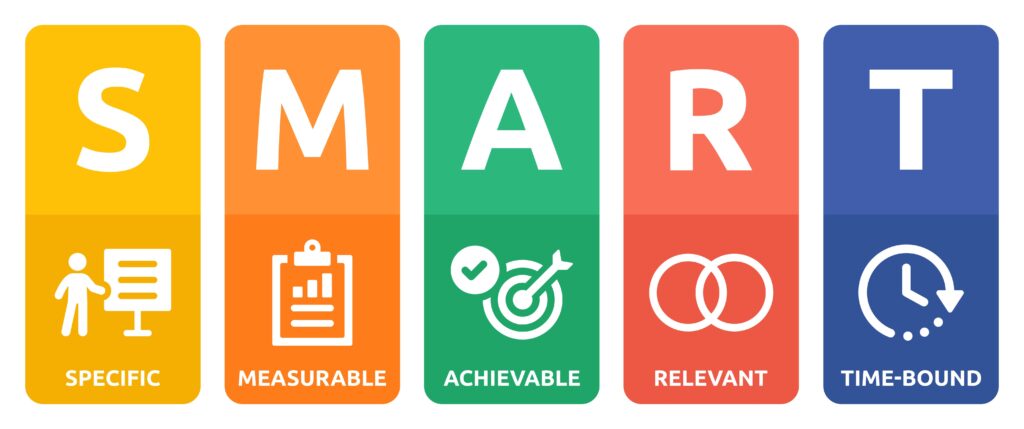
The SMART framework is a classic for a reason. It ensures your goals are clear and achievable:
- Specific: Be clear about what you want to accomplish. For example, instead of “grow my email list,” try “add 500 new subscribers by June.”
- Measurable: Attach a number or metric so you can track progress.
- Achievable: Make sure the goal is realistic based on your current resources and bandwidth.
- Relevant: Align your goals with what matters most to your business.
- Time-Bound: Give yourself a deadline to create urgency and focus.
The positive twist? Make sure your goals feel exciting and inspiring. If the thought of hitting a milestone doesn’t light you up, you might need to adjust it.
Need some help getting started? Check out this SMART goal generator.
2. Break It Down Into Bite-Sized Steps
Big goals can feel overwhelming, but breaking them down into smaller steps makes them more manageable. For example:
- If your goal is to launch a new course, break it down into steps like outlining the course, creating the content, building a sales page, and planning your marketing.
- If your goal is to grow your revenue, focus on smaller actions like improving your client onboarding process, launching a new service, or raising your prices.
Smaller wins along the way keep you motivated and make the big picture feel achievable.
3. Focus on Progress, Not Perfection
Perfectionism can stop you in your tracks. Instead of aiming for perfect results, aim for consistent progress. Some weeks, you might crush it. Other weeks, you might just take one small step—and that’s okay.
For example:
- Instead of “post on Instagram every day,” try “post twice a week consistently for the next month.”
- Instead of “book 10 clients immediately,” focus on “send three pitches this week.”
Celebrating progress (no matter how small) keeps you moving forward without the pressure to get everything perfect.
4. Keep It Positive and Realistic
Goals should stretch you, but they shouldn’t feel so big that they leave you anxious or defeated. Ask yourself:
- Does this goal feel exciting or overwhelming?
- Am I setting this goal because it’s meaningful to me, or because I feel like I “should”?
- What’s my capacity to work on this goal alongside everything else on my plate?
If a goal feels too big, scale it back to something that feels achievable. You can always set a bigger goal later once you’ve hit this one.
5. Build in Time for Reflection
Your goals don’t have to be set in stone. Schedule time every quarter to review your progress, celebrate wins, and adjust your goals if needed. Maybe you need to pivot because your business is growing faster than expected, or maybe you decide to let go of a goal that no longer feels relevant.
Reflection helps you stay flexible and keeps your goals aligned with what’s actually working.
6. Don’t Forget to CELEBRATE!
When you hit a milestone, take time to celebrate it! Whether it’s treating yourself to a fancy coffee, sharing your win with your audience, or just taking a moment to acknowledge your progress, celebrating reminds you of why you’re doing this in the first place.
By setting goals that are clear, realistic, and aligned with what excites you, you’ll set yourself up for a year of progress and growth—without burnout. Remember, it’s not about being perfect. It’s about showing up, taking action, and creating the business (and life) you’ve been dreaming of.
FAQ: New Year Business Goals for 2026
1. What are good new year business goals to set?
Good new year business goals are specific and measurable. They usually fall into a few buckets: revenue/profit, marketing (leads + audience growth), website traffic/conversions, systems/team support, and personal capacity.
Start with 1–3 goals that will make the biggest difference this year, then build supporting “weekly actions” that move them forward.
2. How many business goals should I set for the new year?
Most small business owners do best with 3–5 total goals for the year, with 1 main goal per quarter. Too many goals dilute your focus and make it harder to follow through.
3. What’s the difference between revenue and profit goals?
Revenue is the total amount you bring in. Profit is what’s left after expenses. A revenue goal helps you plan sales, but a profit goal helps you build a business that actually supports your life (and not just your workload).
4. What are SMART new year business goals?
SMART goals are Specific, Measurable, Achievable, Relevant, and Time-bound. Example: “Add 300 email subscribers by June with one lead magnet” is SMART. “Grow my email list” isn’t—because it doesn’t include a number or timeline.
5. How do I stick to my new year business goals?
Tie each goal to a weekly habit (the action that moves it forward), and schedule a quick weekly check-in to track progress. If you’re falling behind, adjust the plan—not the whole goal—by reducing the workload or extending the timeline.
6. What if I get overwhelmed or fall off track?
That’s normal. Pick the smallest next step you can do this week, and restart with a 2-week “reset sprint” (one channel, one goal, one measurable action). Progress beats perfection.
7. When should I review or update my new year business goals?
Review progress weekly (quick check-in), and do a deeper review monthly or quarterly. Your goals don’t have to be set in stone—updates are part of staying realistic and avoiding burnout.
Remember: Your New Year Business Goals Matter
2026 is the perfect time to take a step back, get clear on your vision, and set new year business goals with intentionality. Whether it’s building a stronger financial foundation, growing your audience, or carving out more personal time, your goals are the roadmap to creating the business (and life) you’ve been dreaming about.
Big dreams require big plans, but with the right goals in place, you’ll be amazed at what you can accomplish this year.

Sarah has been part of the Showit team for nearly four years, where she works as a copywriter crafting content that educates, encourages, and celebrates the creative entrepreneurs who make up the Showit community. When she's not writing, you'll find her with a book in hand (usually something about leadership or personal growth), cheering on Arizona sports teams, or connecting with people over a really good cup of coffee because, let's be honest, there's always a cup nearby. Sarah believes in the power of stories, the importance of showing up authentically, and that every entrepreneur deserves to be celebrated for the brave work they're doing.