Load Newsreader Bold Font
In this Blog Post, you will learn four actions you can implement immediately start making more money as a creative business owner without burning out or undercutting your value.
Remember when you decided to quit your 8-5 job because you wanted:
- Flexibility
- Independence
- Control over your time
- The freedom to pick up your kids without asking for permission
- … and so much more.
And at one point, you probably thought, “If I could just make $3,000 a month, we’d be fine.”
Then reality hit.
Taxes took their cut. Savings became non-negotiable. Health insurance entered the chat. And suddenly, that “comfortable” number wasn’t comfortable at all. This is where many creatives panic, and where bad advice starts circulating.
“Just raise your rates.”
“Find higher-ticket clients.”
“Post more thought leadership.”
It sounds logical. It rarely works.
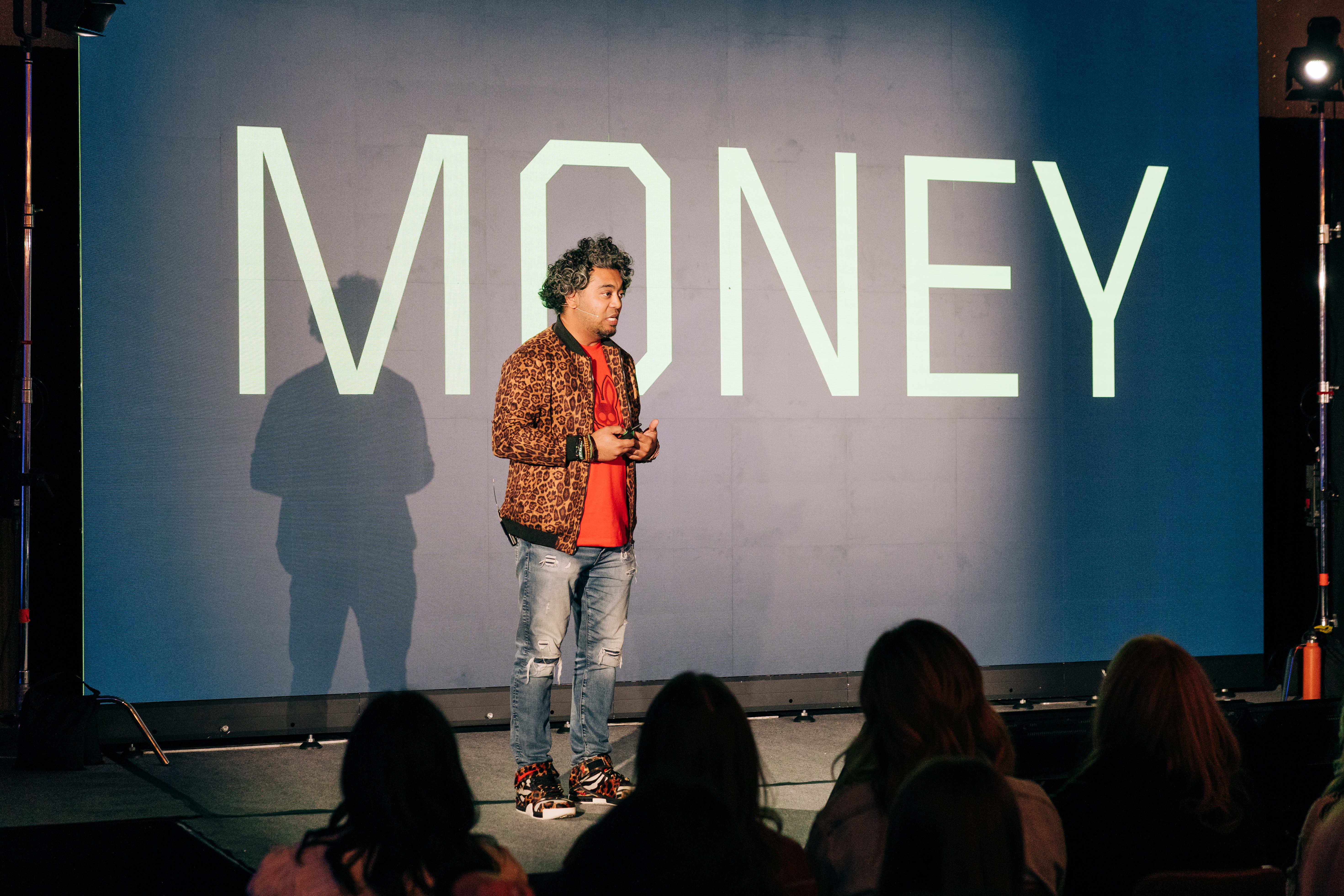
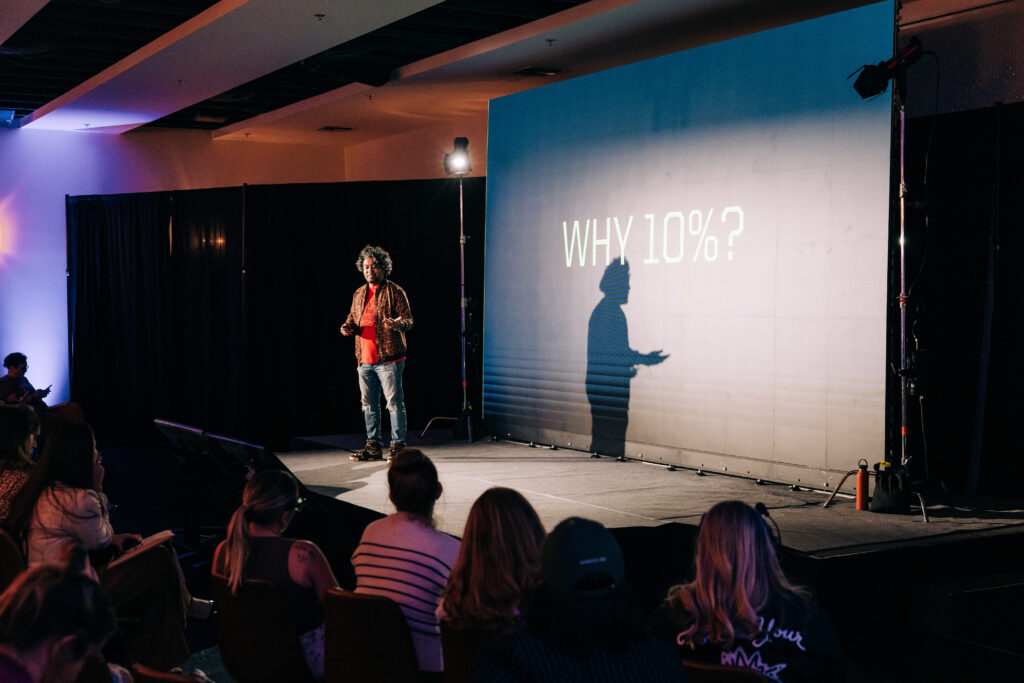
When Dan Mall took the stage at Spark Conference, he walked us through exactly how he figured this out: through trial, error, and eventually, a complete mindset shift about what clients are actually paying for.
That tension between wanting more financial security and fearing client loss sits at the heart of why so many freelancers and agency owners feel stuck.
What he shared wasn’t motivational fluff. It was a practical framework for making more money without relying on luck, viral content, or waiting to be discovered.
Let’s break it down.
Why Talking About Money Feels So Hard
Before we talk tactics, we need to name the elephant in the room:
Money is emotional.
It’s tied to:
- Self-worth
- Upbringing
- Safety
- Identity
For business owners, money isn’t just income. It’s proof that what you’re doing works. That’s why avoiding the conversation doesn’t help. It quietly keeps you stuck.
A healthier relationship with money starts by looking at it honestly. without shame, defensiveness, or avoidance.
The Problem with “Just Raise Your Rates”
Raising your rates can help at first. Early-stage businesses almost always underprice. Small increases often lead to immediate relief. But eventually, you hit a wall.
Prices go up.
Sales go down.
And instead of questioning strategy, many creatives jump to the wrong conclusion: “I need better clients.”
That belief leads to vague marketing, passive waiting, and hoping the right people magically appear. Dan called it what it is: wishful thinking without a system.
That belief leads to posting vague thought‑leadership content on social media, hoping new, well‑funded clients will magically appear. Dan called this approach what it is: wishful thinking with no strategy.

The Four Actions to Actually Start Making More Money
Instead of platitudes, Dan shared four behaviors that consistently unlock growth:
- Expand your potential
- Pitch more
- Charge 10%
- Always give three options
Each one addresses a specific bottleneck that keeps creative businesses stuck at the same income level.
1. Expand Your Potential
According to Dan, every business has two boundaries: a ceiling and a floor.
The ceiling determines how high the business can grow. That ceiling is defined by creativity, how many ways the owner can imagine delivering value, solving problems, and structuring offers.
The floor determines how low the business can go before the owner cracks. That floor is defined by emotional regulation.
Most creatives focus on the ceiling and ignore the floor.
Here’s the truth:
An anxious business owner has a high floor. Small setbacks feel catastrophic. Decisions get delayed. Opportunities feel risky instead of exciting.
Expanding your potential means doing two things at once:
- Raise the ceiling through learning, experimentation, and new offer ideas.
- Lower the floor through emotional regulation, boundaries, and mindset work.
Growth doesn’t come from confidence alone. It comes from stability.
Immediate takeaway:
Ask yourself: “What’s one way I could deliver more value without more hours? Where am I reacting emotionally instead of strategically?”
The Obsession with Inbound
Many business owners secretly believe that if they were doing things “right,” clients would simply come to them. Inbound feels validating. Outbound feels uncomfortable. But waiting to be chosen keeps your floor dangerously high.
Dan reminded the audience that it’s called a client service business for a reason. Service requires initiative. It requires offering help before being asked.
2. Pitch More
Dan illustrated this with a simple example: Imagine sitting down to dinner and being offered three options: Chicken, Salmon, and Vegetarian. No steak on the menu.
When the poll results came in, no one ordered the ribeye, not because they didn’t want it, but because it was never offered.
That’s exactly what happens in creative businesses. You assume clients will ask. They assume you’d mention it if it existed.
Immediate takeaway: Audit your current offers.
What valuable service are you not pitching simply because no one’s asked? The same principle applies to creative businesses.
The Myth of High‑Ticket Clients
There are no low-ticket or high-ticket people.
There are only:
- Context
- Framing
- Timing
The same person who buys a $5 coffee will spend $5,000 on the right outcome.
Blaming “client quality” removes responsibility from strategy and puts your income at the mercy of external factors.
What Makes a Good Pitch
Every effective pitch answers two questions clearly:
- Is this something I want? (More growth, less stress, more clarity, fewer problems)
- Will I get more than I give up? (Time, money, effort)
If either answer is unclear, the pitch fails.
3. Charge 10%
Dan introduced what he calls the simplest path to making $400,000 a year.
Help someone else make $4 million, and charge 10% of the value created. That’s $400,000 in revenue.
Why 10%?
Because humans don’t emotionally register changes below roughly 10–20%. Anything smaller feels insignificant to the buyer, but substantial to the seller.
This isn’t about exploitation. It’s about aligning price with value created.
Immediate takeaway: Stop pricing based on effort. Start pricing based on outcomes.
Ask: What financial or strategic result does this create for the client?
The math can be scaled in many ways: fewer clients at higher value, or more clients at lower value. The principle remains the same.
Unfair Advantages And Why You Should Use Yours
Not all offers are equally easy to sell, and that’s not a personal failure. Some businesses have structural advantages that make growth feel smoother, faster, or more natural.
An unfair advantage isn’t something unethical or manipulative. It’s simply a factor that makes success more likely for one business than another. Every creative business has at least one. The challenge is recognizing it and using it intentionally instead of fighting against it.
One helpful way to identify these advantages is the MILES framework, which highlights five common areas where leverage tends to show up:
Money refers to capital or financial runway. Access to money whether through savings, investment, or steady retainers allows for experimentation. It creates space to test pricing, invest in marketing, or wait for the right clients instead of saying yes out of necessity.
Intelligence includes insight, creativity, emotional intelligence, and pattern recognition. Deep understanding of a specific audience, industry, or problem gives a business an edge. This kind of intelligence often comes from lived experience growing up around a certain profession, working inside a niche, or solving the same problem repeatedly over time.
Location or luck is about proximity physical or digital. Being in the right room, Slack group, community, or conversation at the right moment can unlock opportunities that have nothing to do with talent and everything to do with access.
Expertise is the advantage most creatives recognize immediately. Years of hands-on experience, formal training, or specialization reduce perceived risk for clients. The more specific the expertise, the easier it becomes to justify premium pricing.
Status includes reputation, relationships, and audience. Trust travels through networks. Sometimes a warm introduction, a recognizable name, or a modest but focused following is enough to open doors that cold outreach never could.
The goal isn’t to have all five. The goal is to stack the ones you already have.
This is why copying someone else’s pricing model often fails. Their success may depend on advantages you don’t share yet.
Immediate takeaway: List your top two advantages. Design your offers around them, not against them.
4. Always Give Three Options
A single price creates a yes-or-no decision.
When people feel uncertain, they choose “no.”
Three options change the question from:
“Do I want this?”
to
“Which one fits best?”
Dan recommends this structure:
1. The Vision Option
The ideal future. No shortcuts. Sets the anchor.
2. The Expected Option
Near what the client anticipated spending. Often the most chosen.
3. The Entry Option
Lower commitment, still profitable, keeps momentum moving
Naming each option helps clients internalize the decision emotionally, not just logically.
This isn’t manipulation.
It’s leadership.
Immediate takeaway:
Rebuild your pricing to guide decisions, not force them.
Start Making More Money in Your Creative Business
Making more money isn’t about working harder or waiting longer.
It’s about:
- Expanding what you believe is possible
- Offering value intentionally
- Pricing based on impact
- Leading clients through decisions with clarity
That’s what sustainable growth actually looks like.
Ready to build a website that supports your growing business? Start your free Showit trial today and join thousands of creative entrepreneurs who are building businesses that truly work for them.

Sarah has been part of the Showit team for nearly four years, where she works as a copywriter crafting content that educates, encourages, and celebrates the creative entrepreneurs who make up the Showit community. When she's not writing, you'll find her with a book in hand (usually something about leadership or personal growth), cheering on Arizona sports teams, or connecting with people over a really good cup of coffee because, let's be honest, there's always a cup nearby. Sarah believes in the power of stories, the importance of showing up authentically, and that every entrepreneur deserves to be celebrated for the brave work they're doing.