Load Newsreader Bold Font
Anyone can launch a business in an afternoon now. AI writes the copy, generates the logo, schedules the posts. Your website looks professional. Your Instagram feed is cohesive. Everything looks like it should work.
So why are your DMs empty? Why aren't people buying?
Here's the hard truth: In 2026, polish is cheap. What's expensive (and rare) is trust.
Your audience doesn't just need a beautiful website. They need to know why you are the person who can help them. They need to understand what makes you different from the 47 other people doing something similar. They need to feel like you actually get them.
That's what this series is about. Not the surface stuff, but the strategy underneath it all. The foundation that turns a good idea into a six-figure business.
Because if you're posting every day but your audience isn't converting, if you've tried five different strategies and none of them stuck, if you launched your website and heard crickets, the problem isn't your talent. It's not your work ethic. It's that you skipped the most important step:
You never clarified who you are and why someone should choose you.
This is Part 1 of our Six-Figure Brand series, and we're starting exactly where you need to: positioning and brand identity. Without this clarity, your marketing messages fall flat, your pricing feels arbitrary, and you're starting from scratch with every new customer.
By the end of this post, you'll have the framework to define who you serve, what makes you different, and how to show up consistently in a way that actually builds trust and attracts your ideal clients.
What a Brand Actually Is (And Why It Comes Before Revenue)
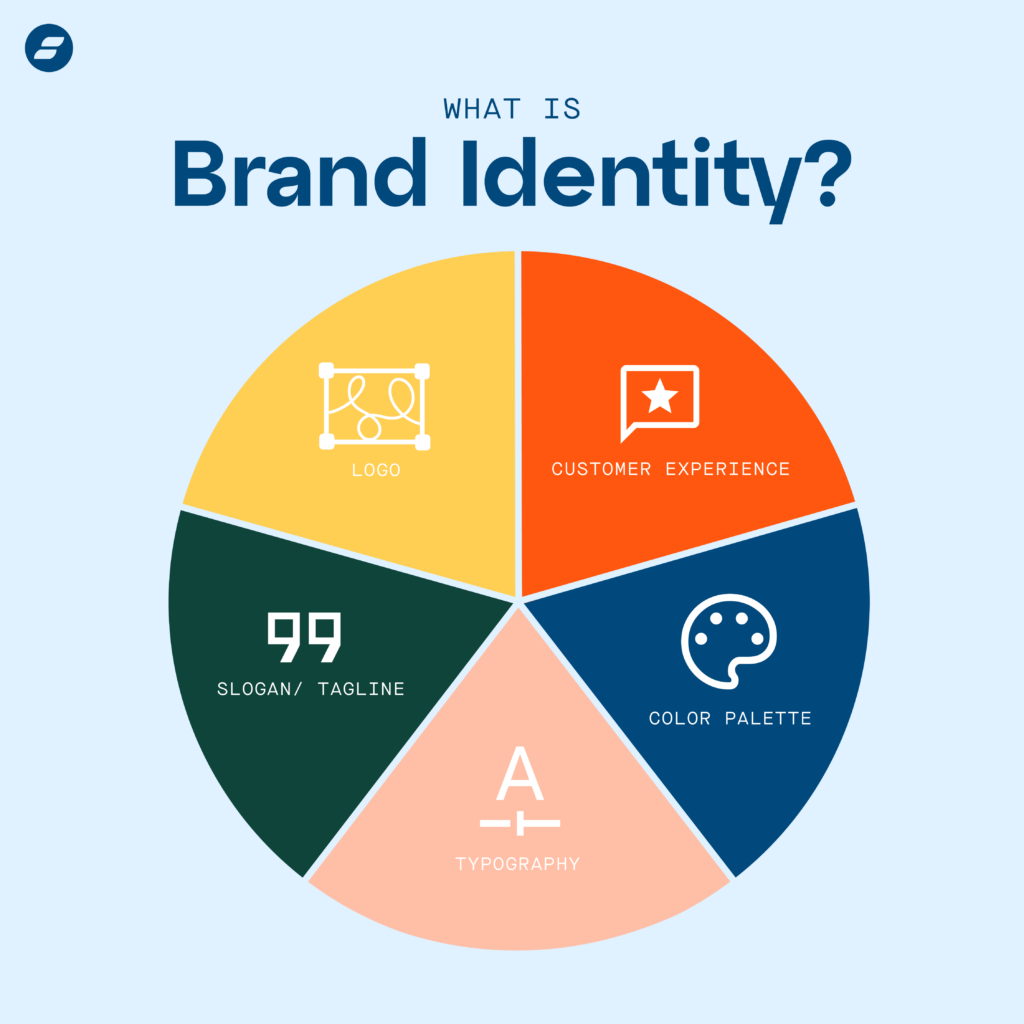
Most people think branding is your logo and color palette. It's not.
Your brand is the gut feeling someone has when they think about your business. It's the reason someone picks you over a cheaper competitor. It's why customers come back, tell their friends, and defend you online when someone criticizes your work.
Here's what BRAND actually includes:
- How you make people feel (personality, values)
- What you're known for (your positioning and unique angle)
- The promise you make and actually keep (your reputation)
- The story people tell about you when you're not in the room
A business without a brand is just a transaction machine. You're competing on price, fighting for attention, and starting from scratch with every new customer.
A business with a brand builds equity. Your reputation works for you. Your customers become your marketing team. You can charge more because people trust you before they even talk to you.
The “Recipe Card” Principle
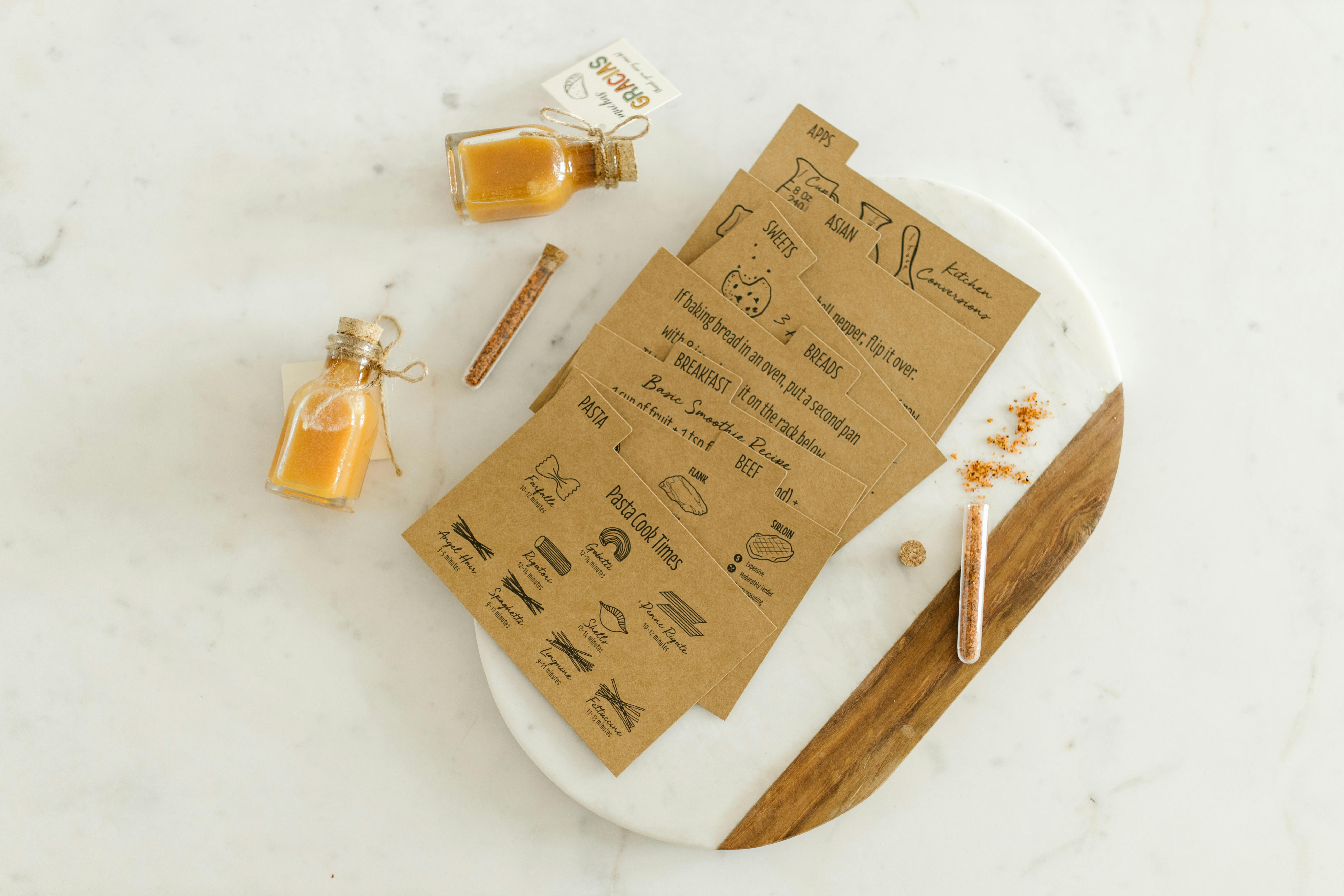
Think of your brand foundation like the recipe your grandmother swore by. When you've got it written down, the exact measurements, the why behind each ingredient, you can make that dish with your eyes closed. You can teach someone else to make it. You can even riff on it when you're feeling creative.
That's what happens when you nail your brand foundation early. Your marketing messages practically write themselves because you know exactly who you're talking to and what they need to hear. The right customers find you and think, “Yes, this is for me.” Your pricing makes sense to you and to them. And here's the best part: opportunities start coming to you instead of you scrambling to find them.
But when you try to scale without that foundation? It's like trying to recreate that family recipe without the recipe card, throwing in a little of this, hoping for the best with that.
The good news? You can build (or rebuild) that foundation at any stage. It's never too late to get clear on what you stand for.
How Brand Strategy Drives Six-Figure Growth
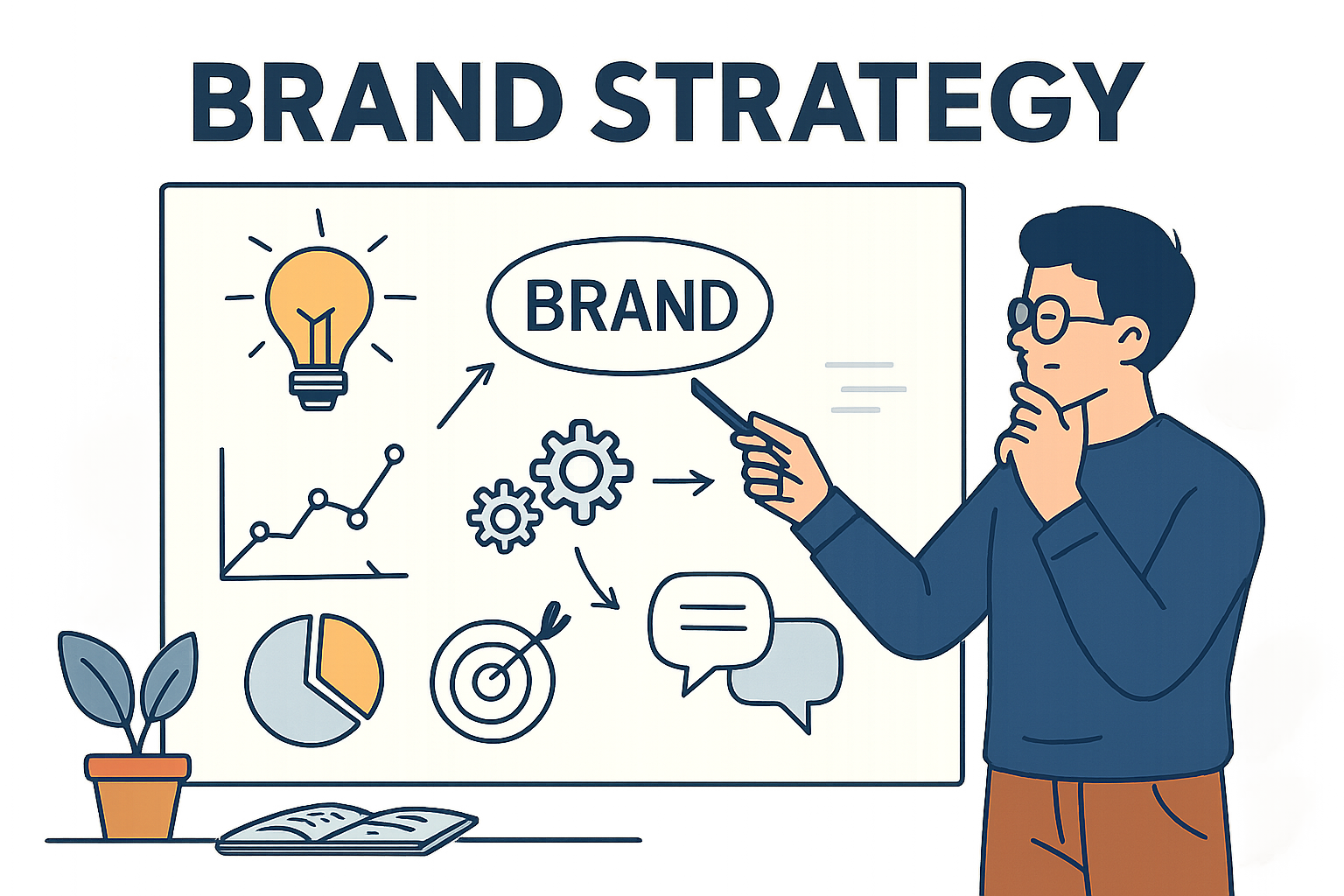
Six figures isn't about working harder. It's about smarter decisions that stack up.
Strong brands grow faster because:
- Higher prices stick. When you're differentiated, you're not competing on price. You can charge 30-50% more than competitors, and customers will pay it.
- Customer acquisition costs drop. Word of mouth, organic search, and repeat customers all cost less than paid ads. Brands get found. Businesses have to pay to be seen.
- Retention improves. People don't just buy once; they come back, upgrade, and refer friends. Lifetime customer value skyrockets.
- Opportunities come to you. Partnerships, press features, speaking opportunities, and collaborations happen when you're known for something specific.
The math is simple: If you can charge $200 instead of $100, you need half as many customers to hit six figures. If your customers refer one friend each, your acquisition costs drop by 50%. If people come back twice instead of once, your revenue doubles without finding a single new customer.
That's the brand multiplier effect. And in 2026, it's the only sustainable path to six figures.
1. Define Your Market & Positioning
You can't build a six-figure brand for everyone. The fastest path to $100K is serving a specific audience so well that they can't imagine working with anyone else.
This is where most people get stuck. They're afraid to niche down because they think it limits their market. The opposite is true. When you speak to everyone, you connect with no one.
Start by getting crystal clear on who you're serving and what they actually need.
Audience research questions:
- What keeps them up at night? (What's their real fear or frustration?)
- What have they already tried that didn't work?
- Where do they hang out online? (Platforms, communities, podcasts, newsletters)
- What language do they use to describe their problem?
- What would success look like for them in 6 months?
Where to find answers:
- Reddit threads and Facebook groups where your audience complains (Yes, they do exist!)
- Amazon reviews of related products (read the 3-star reviews especially)
- YouTube comments on competitor content
- Direct conversations (interview 5-10 people in your target market)
Competitive research:
Look at 5-10 competitors or adjacent businesses. Ask:
- What do they do well? (Where are they strong?)
- What do they do poorly? (Where do they fall short?)
- What's missing from their offer? (What gaps exist?)
- How do they position themselves? (What's their angle?)
- What do their customers complain about? (Read reviews and comments)
You're not looking to copy—you're looking for white space. Where is there an underserved audience, an overlooked angle, or an unmet need?
2. Craft Your Value Proposition
Your value proposition is the specific value you deliver and why you're the obvious choice to deliver it.
Formula: I help [specific audience] achieve [specific outcome] without [common obstacle/frustration] by [your unique method/approach].
Example: “I help solopreneurs launch profitable digital products in 90 days without expensive courses or complicated tech by using a simple validation-first framework.”
What makes a strong value proposition:
- Specific audience (Who exactly?)
- Clear outcome (What measurable result?)
- Differentiator (What's your unique take or method?)
- Addresses a real pain point they've experienced
Market gaps to look for:
- Underserved experience level (most advice is for beginners or experts; what about the middle?)
- Overlooked industry vertical (broad advice doesn't translate well to niche industries)
- Missing approach (everyone teaches slow and steady, but what about fast-track options?)
- Service gap (everyone offers DIY or done-for-you, but what about done-with-you?)
3. Write Your Positioning Statement
Your positioning statement is your internal compass. It keeps your marketing consistent and your decisions aligned.
Template:
For [target audience], [your brand] is the [category] that [key benefit/difference] because [reason to believe/proof].
Example:
“For burned-out service providers, Momentum Method is the business coaching program that helps you hit $10K months without doubling your hours because our clients work 25% fewer hours while increasing revenue by 40% on average.”
Test your positioning:
- Can you say it out loud without cringing? (If it sounds like corporate jargon, rewrite it)
- Would your ideal customer immediately think “that's for me”? (If it's too vague, tighten it)
- Does it exclude people? (Good positioning is as much about who it's not for)
4. Create Your Target Audience Persona
Don't create 5 personas. Create one incredibly detailed picture of your ideal customer.
Core persona elements:
- Demographics: Age, location, industry, role
- Psychographics: Values, beliefs, priorities, fears
- Current situation: What's true for them right now?
- Desired situation: Where do they want to be?
- Obstacles: What's blocking them from getting there?
- Buying triggers: What has to happen for them to say “I need this now”?
- Objections: What makes them hesitate before buying?
Name your persona. Give them a face. Make them real enough that you can ask, “Would Sarah actually care about this?” before you publish anything.
5. Map Your Competition
Map out where you sit relative to competitors on two axes that matter to your audience.
Example axes:
- Price (affordable ↔ premium)
- Approach (DIY ↔ done-for-you)
- Speed (slow/sustainable ↔ fast/intensive)
- Style (practical ↔ inspirational)
Plot yourself and 4-5 competitors. Where's the white space? That's your opportunity.
Create Your Brand Identity
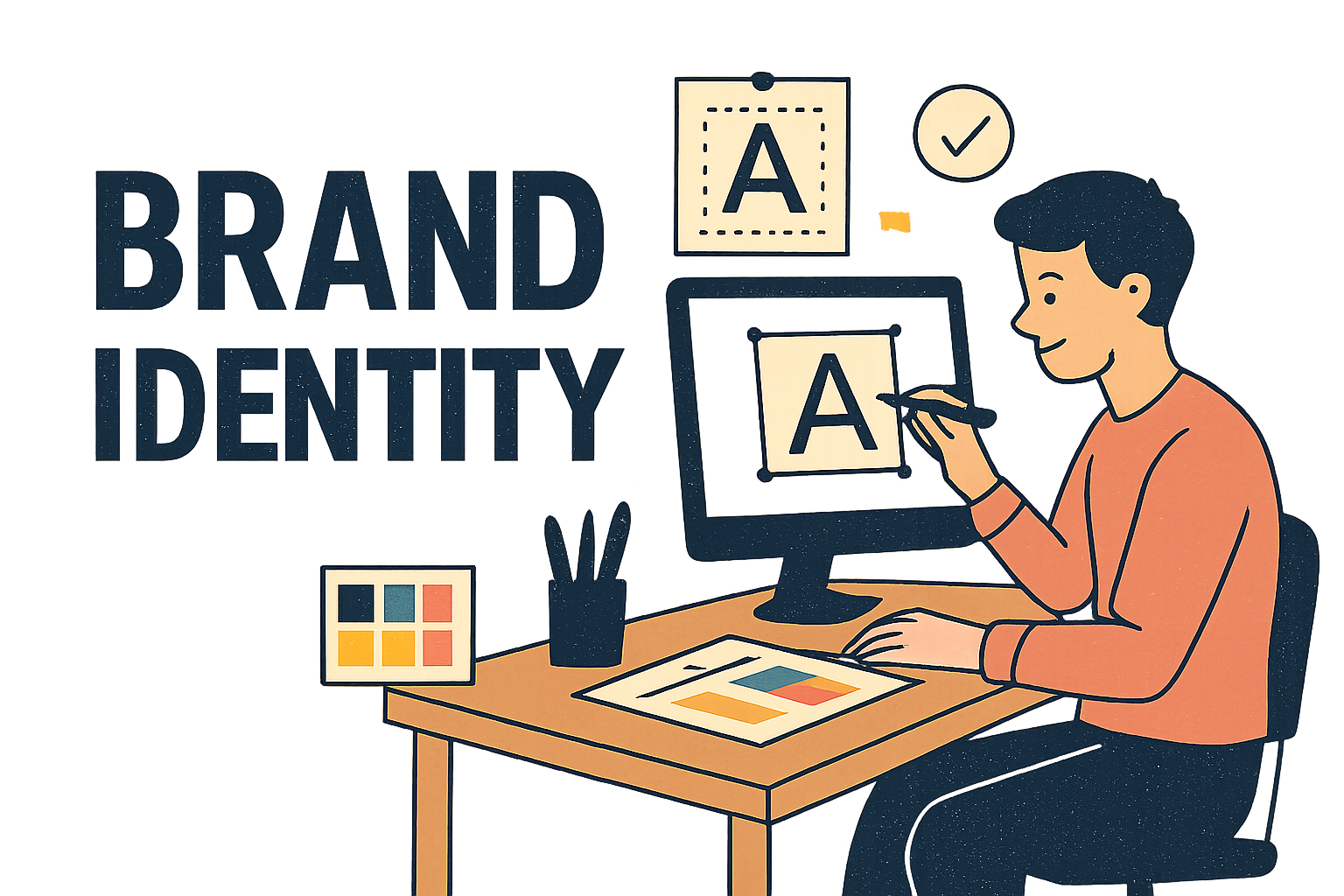
Your brand identity is how you show up visually and verbally. It's not just aesthetics, it's strategic. Every choice you make should reinforce your positioning and connect with your target audience.
1. Your brand name should:
- Be easy to spell and pronounce
- Be available as a domain (.com preferred)
- Feel aligned with your brand personality
- Not box you in as you grow
If you're a personal brand, your own name often works best. It's authentic, flexible, and can't be copied.
2. Your slogan or tagline should:
- Reinforce your positioning in 5-10 words
- Be memorable without being clever for clever's sake
- Speak to the value or feeling you deliver
Examples:
- Nike: “Just Do It” (empowerment + action)
- Patagonia: “Build the Best Product” (quality + values)
- Personal brand example: “Smart marketing for people who hate marketing.”
Skip the tagline if you don't have a great one. A mediocre tagline dilutes your brand.
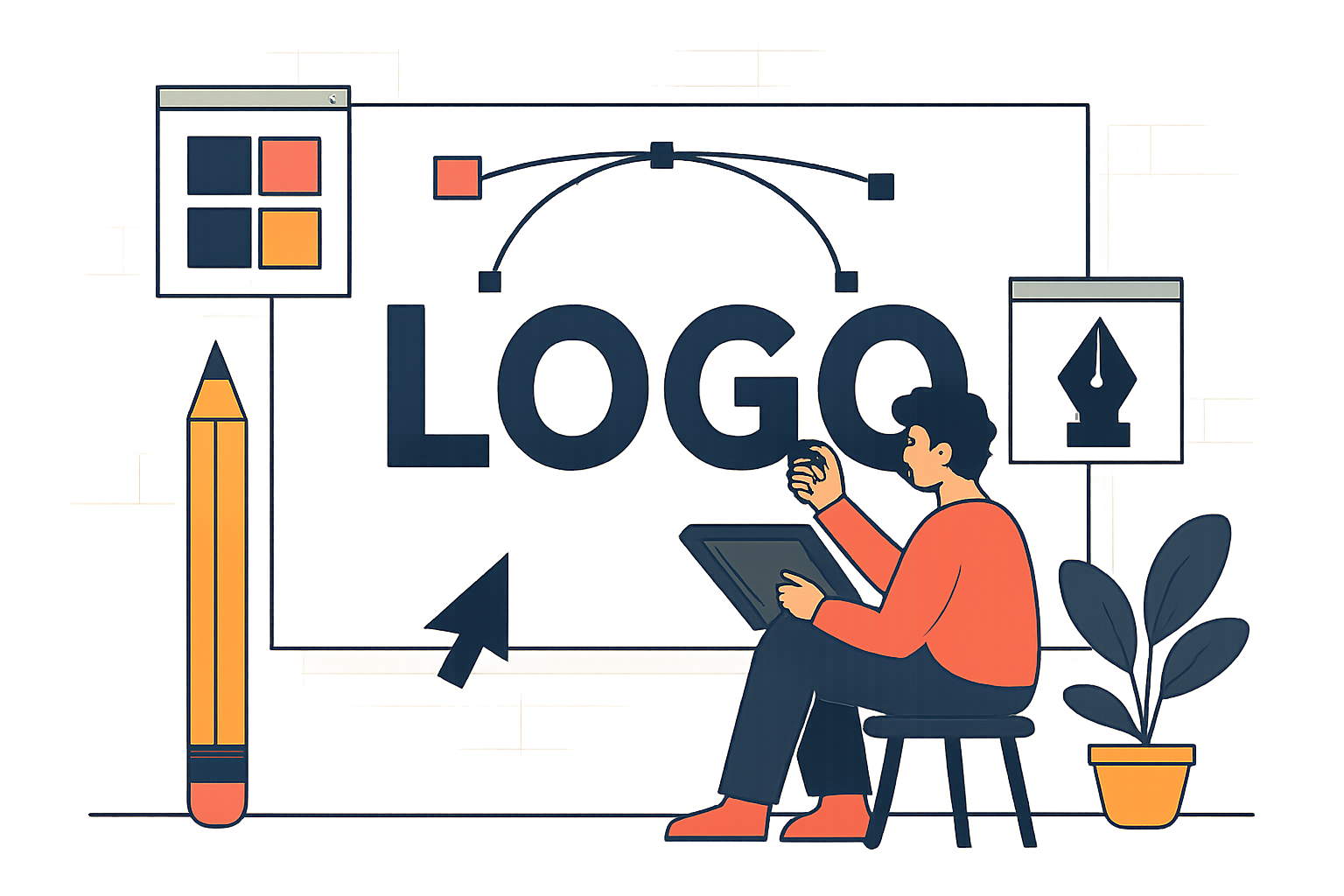
Logo + Visual Identity
Your logo doesn't have to be complex. It needs to be recognizable, scalable, and appropriate for your audience.
1. Logo types:
- Wordmark: Your name in a custom font—clean and professional
- Icon + wordmark: More memorable, but requires strong icon design
- Monogram: Your initials—works for personal brands
2. Visual identity elements:
- Color palette: 2-3 primary colors that feel aligned with your brand personality. Research color psychology, but don't overthink it. Consistency matters more than perfection.
- Typography: Choose 2 fonts—one for headlines, one for body text. Make sure they're readable on screens and reflect your brand vibe (modern, classic, bold, minimal).
- Photography style: Will you use photos of yourself? Stock images? Illustrations? Custom graphics? Pick one direction and stick with it.
- Design style: Minimalist? Bold and colorful? Vintage? Whatever you choose, apply it consistently.
3. Tools for DIY visual identity:
- Canva (templates + design tools)
- Adobe Express
- Figma (for more advanced design control)
- Hire on Fiverr or Upwork if design isn't your strength
A non-negotiable: Your visual identity should look cohesive everywhere. If someone sees your Instagram, then visits your website, then opens your email, they should immediately recognize it's you.
Brand Voice & Messaging
Your brand voice is how you communicate. It's your personality in words.
1. Questions to define your voice:
- If your brand were a person, how would they talk at a dinner party? (Formal? Casual? Funny? Direct?)
- What do you want people to feel when they read your content? (Inspired? Confident? Energized? Calm?)
- What words or phrases do you never want to use? (Jargon? Corporate speak? Overly salesy language?)
2. Pick 3-4 voice attributes:
Examples:
- Warm, direct, and empowering (not cold, vague, or preachy)
- Smart, witty, and irreverent (not stuffy, boring, or overly polished)
- Thoughtful, honest, and grounded (not hype-y, fake, or overly promotional)
3. Create a messaging framework:
Write out the core messages you want to reinforce across all content:
- Your mission (why you exist)
- Your values (what you stand for)
- Your key differentiators (what makes you different)
- Your customer transformation (what changes for people who work with you)
4. Consistency across platforms:
Your Instagram captions, website copy, email newsletters, and sales pages should all sound like the same person. If your website feels corporate but your emails are casual, it's confusing. If your Instagram is inspirational but your sales page is pushy, it's off-putting.
Audit your content quarterly. Read everything out loud. Does it all sound like you?
5. Authentic Storytelling
People connect with stories, not bullet points. Your brand story is the narrative that ties everything together.
What to include:
- The problem you experienced that led you to start this business
- The moment you realized things had to change
- What you learned along the way (especially the hard stuff)
- Why you care about helping others with this specific problem
- Where you're headed (your vision for the future)
What to avoid:
- Exaggerating your success or credentials
- Glossing over failures or making everything sound easy
- Copying someone else's story structure or arc
- Making it all about you (the story should ultimately be about them—your customers)
Share your story once clearly on your About page, then weave elements of it throughout your content. Don't retell the whole origin story in every email—reference parts of it when relevant.
Real beats perfect. People trust vulnerability more than polish. If you've made mistakes, own them. If you're still figuring things out, say so. Authenticity builds trust faster than anything else.
Your Brand Foundation Checklist
You've just walked through the essential elements of building a six-figure brand foundation. Here's what you should have by now:
❐ Clear positioning statement that defines your unique angle
❐ Detailed target audience persona
❐ Competitive map showing your white space opportunity
❐ Brand name and optional tagline
❐ Visual identity elements (colors, fonts, logo direction)
❐ Defined brand voice attributes
❐ Core messaging framework
❐ Brand story that connects authentically with your audience
What's Next
Your brand foundation is set. Now it's time to build the business model that turns this positioning into revenue.
In Part 2 of this series, we cover:
- How to choose between service, product, or hybrid models
- Pricing strategy that positions you for six figures
- Offer design that makes buying a no-brainer
- Revenue forecasting so you know exactly what you need to hit $100K
The Six-Figure Brand Series:
- Part 1: Foundation & Positioning (you are here)
- Part 2: Business Model & Pricing (coming next)
- Part 3: Marketing Strategy for 2026
- Part 4: Scaling, Systems & Metric


Sarah has been part of the Showit team for nearly four years, where she works as a copywriter crafting content that educates, encourages, and celebrates the creative entrepreneurs who make up the Showit community. When she's not writing, you'll find her with a book in hand (usually something about leadership or personal growth), cheering on Arizona sports teams, or connecting with people over a really good cup of coffee because, let's be honest, there's always a cup nearby. Sarah believes in the power of stories, the importance of showing up authentically, and that every entrepreneur deserves to be celebrated for the brave work they're doing.